

SRN - US News

Archaeologists find musket balls and fort linked to the Battle of Bunker Hill

BOSTON (AP) — Generations of Boston families played and picnicked on the grassy, sloping lawns of the Bunker Hill Monument.

Musket balls and other artifacts from one of the American Revolution’s most consequential battles were buried just below their feet the whole time.

Inspired by a centuries-old map, archaeologists have been digging in the park that sits on the site where American patriots hastily constructed an earthen fort to slow advancing British forces at what became known as the Battle of Bunker Hill.

Ground-penetrating radar identified potential locations for the fort in Boston’s Charlestown section. Soon after digging the first trench, the team led by Joe Bagley, the city of Boston’s archaeologist, found definitive signs of a ditch constructed hours before the battle on June 17, 1775, one of the first of the American Revolution.

“The part that’s really crazy to me is that we get to stand in the same ditch,” said Bagley, standing over one of the two dig sites, where soil is removed about 4 inches (10 centimeters) at a time, put in buckets and filtered through screens. Any items found are bagged up and identified.

So far, the dig has uncovered musket balls and parts of a musket from the battle. They also found objects likely left behind by British troops who occupied the area after the battle — including tea cups, tobacco pipes, sleeve buttons and a wig curler. There were nearly 150 combatants who died there but no human remains have been found, though a forensic archaeologist is on site to identify any bones.

“Everything about the ditch is from 1775. You’ve got musket balls, gun flints. It’s what you would expect to see,” Bagley said. “It’s pretty powerful because these things are being dropped in the middle of the battle.”

The start of the American Revolution is often associated with the Battle of Lexington and Concord, skirmishes fought on April 19, 1775. But many scholars cite Bunker Hill and June 17 as the war’s first significant battle.

Rebels intended to hold off a possible British attack by fortifying Bunker Hill, a 110-foot-high (34-meter-high) slope in Charlestown across the Charles River from British-occupied Boston. But for reasons still unclear, they instead took a position on a smaller and more vulnerable ridge known as Breed’s Hill, where most of the fighting took place.

The battle ended with the rebels in retreat, but not before the British had sustained more than 1,000 casualties. Bunker Hill is often portrayed as an American victory, since the British failed to win decisively and it served to galvanize the colonies against the British.

Today, a 221-foot (67-meter) white obelisk atop Breed’s Hill memorializes the battle.

At the dig site, Joel Bohy, a battlefield archaeologist who specializes in identifying American Revolution weaponry, marveled at what had been pulled from the dirt. One volunteer held in her hand two jagged stones — the gray one was an English gun flint while a beige one was a French gun flint. When the trigger on the musket was pulled, flint struck the steel, producing sparks that ignited the gunpowder.

They also found eight marbled-sized musket balls from both sides in the battle. The markings and shape of some bullets showed they had been fired from a distance but didn’t hit anyone. If they had, the balls would have been deformed.

“You can see the ramrod mark from when the soldier rammed it down. You can the little ring on the top where it was pushed down,” Bohy said, adding that “marks on the edge of the ball” show that it had been fired.

Using pick axes and shovels, more than 1,000 provincials and residents dug through the night to construct a ditch that was 3 feet (1 meter) deep and over 6 feet (2 meters) wide. They shoveled the soil in front of the ditch to make a 6-foot-high wall or parapet that reached 150 feet (46 meters) long on each of the four sides.

A map drawn by Henry Pelham two months after the battle showed a square redoubt on Breed’s Hill. But it wasn’t until the dig that anyone had confirmed the shape in the map was accurate. Previous digs in the 1990s had found items related to the battle and some evidence of the ditches.

“If you come to the site, we have the monument, we have a lot of maps on display, and the landscape is beautiful. But you can’t really see the fort, the fortifications that were built,” Bagley said. “Very little of what’s here visibly is from 1775. So, this trench is the reason why all of this is here.”

Beyond locating the fort, the dig also provides visitors a chance to hold “a piece of the battle in their hand,” Bohy said. “In a way, it makes the history more dimensional when you look at these objects from the battle itself.”

Several tourists from Colorado stopped by to watch the dig. One visitor, Greg Nockleby, who had spent a week in Boston learning about American history, said watching the archaeologists at work was a “wonderful surprise.”

“A live dig happening right now to uncover our nation’s history is amazing,” he said. “To see that there has been people here who have died for our freedom and our nation is very immersive.”


Brought to you by www.srnnews.com

Iran will reopen Strait of Hormuz and can sell oil freely under deal with US, according to leaks

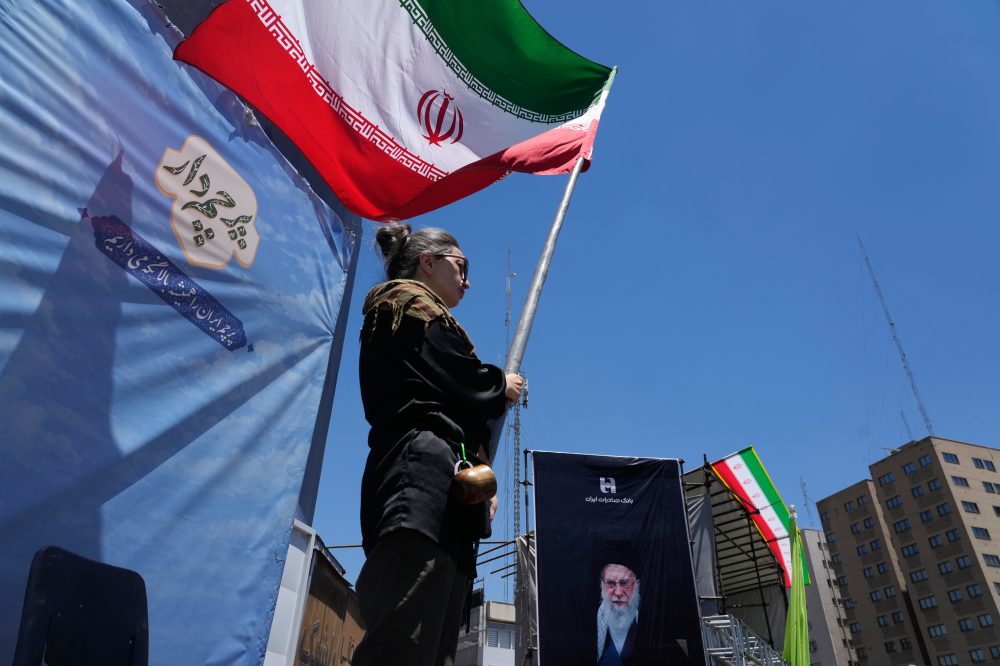
DUBAI, United Arab Emirates (AP) — Iran will immediately take steps to reopen the Strait of Hormuz once a tentative deal with the U.S. to end the war is signed and will be allowed to sell its oil without restrictions, according to leaked copies of an interim agreement that officials say broadly matches the document.

The accord, due to be formally signed in a ceremony in Switzerland on Friday, lays out that the U.S. would secure at least $300 billion to rebuild Iran after the war and work to end all American and United Nations sanctions imposed on Tehran if a final agreement addressing Iran’s nuclear program is reached.

The U.S. agreement to immediately allow Iran to sell its oil freely and the offer to eventually lift all sanctions represent major concessions that outstrip the terms of Iran’s 2015 nuclear deal with world powers, which U.S. President Donald Trump unilaterally withdrew America from in his first term, declaring it the “worst deal ever.” This new accord likely will draw intense criticism in Washington — and appears to be a major setback for Israeli Prime Minister Benjamin Netanyahu, who launched the war with Trump on Feb. 28.

The deal calls for an immediate end to all fighting in Lebanon between Israel and the Iranian-backed militia Hezbollah. That is one of the most delicate parts of the agreement because Israel has maintained it will continue to defend itself and to occupy vast swaths of Lebanon. Iran has said it must withdraw under the deal, although the leaked versions make no mention of withdrawal.

The two sides are to start 60 days of negotiations over a final deal that the Trump administration insists will prevent Iran from ever developing a nuclear weapon. The U.S. offers appear aimed at enticing Iran to strike an agreement.

But in the meantime, Iran appears to be getting benefits up front while making few concessions. Much of the agreement would restore the status quo before the war, including ending hostilities and reopening the strait, which is a crucial passage for the world’s oil and natural gas and whose closure created a historic energy crisis.

Other concessions to Iran — some of which are extraordinary, including the money for rebuilding, the full lifting of sanctions and the release of frozen assets — appear dependent on the progress of further negotiations on Iran’s nuclear program.

A person who was briefed on the memorandum of understanding after it was signed and another who viewed a copy beforehand said it largely matched the text of what was published by the Saudi-owned broadcaster Al Arabiya, which reported details of the deal Tuesday. The two people spoke on condition of anonymity because of the sensitivity of the discussions.

Another two officials in the Mideast, who spoke on condition of anonymity for the same reason, also said the versions published by Al Arabiya and Bloomberg broadly matched the final agreement.

The White House and other American officials have not published the terms and did not immediately respond to questions. Iran also has not published an official version of the deal. Iran’s semiofficial Tasnim news agency, close to its paramilitary Revolutionary Guard, claimed Wednesday that Bloomberg’s version had missing portions, without offering a full accounting.

The deal provides a major win for the global economy — the reopening of the Strait of Hormuz, the narrow mouth of the Persian Gulf through which a fifth of all oil and natural gas traded once passed before the war began. Since then, Iranian attacks on shipping and the threat to vessels effectively shut the strait.

The strait’s closure drove up energy prices around the world and made many basics, including food, more expensive. Iran let out some vessels that paid tolls, something never done before in the strait, which sits in the territorial waters of Iran and Oman and long has been considered an international waterway. The U.S. later provided military support to get other tankers out, but traffic through the strait was nowhere near levels before the war.

The deal calls for the U.S. to lift a blockade imposed on Iranian ports and for the strait to return to its prewar traffic levels in 30 days, while acknowledging Iranian mines may still be in its waters that need to be destroyed.

While the deal says that the eventual lifting of sanctions on Iran will depend on future negotiations, the U.S. will immediately issue waivers on Iranian oil sales.

Granting oil waivers directly at the start of the 60-day talks strips the U.S. of a major point of leverage over Iran. In the years before the 2015 nuclear deal, Iranian oil faced international sanctions limiting their sales. Only at the conclusion of the overall deal in 2015 were those sanctions lifted.

The interim deal also opens the door to ending all sanctions Iran faces from the U.S. and at the U.N. — though it says the schedule for that will be worked out later. Still, that is far beyond the 2015 deal, which only lifted some sanctions in exchange for Iran drastically reducing its enrichment and stockpile of uranium.

The accord would also provide Iran with at least $300 billion to rebuild after an intense U.S. and Israeli bombing campaign — an extraordinary figure and another major benefit for Iran. U.S. Vice President JD Vance has said Gulf Arab nations would provide that amount as investments in Iran.

The interim deal sets a 60-day window, which can be extended, to negotiate over limiting Iran’s nuclear program, which has been discussed at multiple rounds of talks during Trump’s second administration without success. Iran maintains its nuclear program is peaceful, though it has enough highly enriched uranium to build multiple atomic bombs, should it choose to do so, according to the International Atomic Energy Agency.

In the interim deal, Iran reiterates that it will never produce nuclear weapons — a promise that it also made in the 2015 nuclear accord. Iranian diplomats have long pointed to statements from the late Ayatollah Ali Khamenei that Iran wouldn’t build an atomic bomb. It remains unclear whether Khamenei’s son, Iran’s new Supreme Leader Ayatollah Mojtaba Khamenei, will follow that or not.

Trump has cited shifting goals for the war, including at times vowing it would end Iran’s nuclear and missile programs and its support for Hezbollah and other proxy groups in the region. He also suggested it could lead to toppling the Iranian government.

The interim deal falls short of all of these goals. The negotiations also exposed a rift between Netanyahu and Trump, the Israeli leader’s closest and most important ally, just as Netanyahu is seeking reelection. Netanyahu has come under heavy domestic criticism over the emerging deal but will be hard pressed to go against Trump, given Israel’s heavy reliance on the U.S. for diplomatic and military support.

___

Miller and Price reported from Washington, and Magdy from Cairo.


Brought to you by www.srnnews.com

Most Americans see freedoms under threat but core to nation’s identity, AP-NORC poll finds

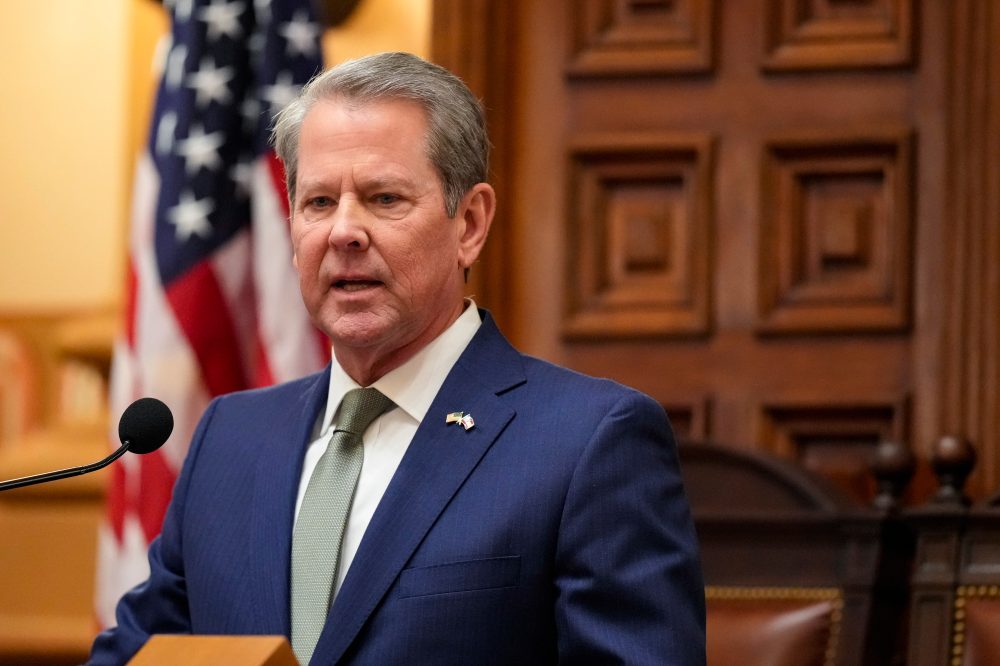
WASHINGTON (AP) — Most Americans believe civil liberties like the right to vote are under threat, according to a new AP-NORC poll, while also continuing to agree that the rights expressed in the nation’s founding documents are still core to American identity.

The survey from The Associated Press-NORC Center for Public Affairs Research finds that most Americans across demographics believe the right to vote, the right to free speech and freedom of religion are integral to the country. But they were more divided on the importance of the right to bear arms, and few — about one-third or less — saw those rights as safe from threats.

The survey, which was conducted April 16-20 — before the Supreme Court’s recent ruling that winnowed a section of the Voting Rights Act — highlights an enduring consensus among Americans that personal freedoms are vital to the country’s national identity. But it also reveals deep anxieties about the nation’s trajectory on the cusp of a summer filled with celebrations of the country’s semi-quincentennial birthday.

“Our idea of rights has been very consistent in this country until the last few years,” said Louise Rochon, 85, of Connecticut. “Now, they’re all under threat. Every single last one of them.”

About 9 in 10 Americans say the right to vote is “extremely” or “very” important to the United States’ identity, the poll found. About the same proportion of Americans consider freedom of speech to be highly important to the country’s identity. Meanwhile, about 8 in 10 Americans consider freedom of religion to be core to the national identity, while about 6 in 10 Americans consider the right to keep or bear arms as highly important to the nation’s identity.

But many in the country see those same principles as imperiled today. About two-thirds of Americans view the right to vote as under some threat, with about one-third saying voting rights are under “major threat” while about 3 in 10 said they faced a “minor threat.” Only about one-third of Americans said voting rights faced “no threat at all.”

Additionally, nearly half of Americans say freedom of speech is under major threat, followed by about 3 in 10 who said the same about gun rights and religious freedom.

The country is going “down the drain,” said Tracy Gonzales, an independent from San Antonio, Texas. Americans of all stripes, she said, have “thrown religion to the side at the moment” and allowed for other civil liberties to be eroded amid fierce debates over immigration and the economy.

“Given everything going on with our president, you really don’t have time to think of anything else,” said Gonzales, 37, of President Donald Trump’s immigration crackdowns. “There are so many other crimes that are being committed and people that actually need help, and you’re focused on the ones that are trying to get it together.”

The poll’s results also surfaced complicated opinions about democracy and identity among Black Americans. Those are likely rooted, at least in part, in the country’s history of denying voting rights and full citizenship to people of African descent for centuries.

Black Americans are less likely than white Americans to say the right to vote is “extremely” or “very important” to American identity, with about three-quarters agreeing with the sentiment compared to about 9 in 10 white Americans.

But about 4 in 10 Black Americans say that the right to vote is facing a “major” threat in the country today, higher than any other racial group.

“You cannot feel like you are a total and full part of the American experiment unless you have the right to vote,” said Antonio Williams, a school administrator in Dallas, Texas, who is Black. “And African Americans didn’t fully get to enjoy the right to vote until about 60 years ago, and I feel like it’s under threat right now.”

Independents and younger adults are less likely than Americans overall to say voting and freedom of speech are central to American identity.

“My age group has grown up a lot more with social media as part of their existence in life and the microcosms that that creates in politics,” said Julian Goodwin-Ferris, 28, a professional dancer from New Jersey.

“I think we feel more like our voice doesn’t matter as much because it feels like we’ve grown up with our rights sort of being more ignored,” said Goodwin-Ferris.

Americans at times diverged along partisan lines in their view of the threats to rights, with Democrats seeing a greater threat to freedom of speech, while Republicans were more worried about the right to keep and bear arms.

While Democrats and Republicans are similarly likely to say freedom of speech is at least “very important” to the nation’s identity, about 6 in 10 Democrats say freedom of speech is facing a “major threat” compared to about 4 in 10 independents and roughly one-third of Republicans.

Similarly, while most Americans believe the right to bear arms is at least “very” important to the nation’s identity, about 8 in 10 Republicans agree with that sentiment, compared to only about 4 in 10 Democrats. About half of independents shared that view. And about 4 in 10 Republicans found that the right to bear firearms was under threat, an increase from October 2025 not reflected among either Democrats or independents.

“We have the Bill of Rights for a reason,” said Nuri Simmons, a warehouse worker in New York and a registered Democrat. Simmons, 31, said that threats to different rights “bleed into each other” and that while he was most concerned about threats to voting rights today, he understood that others may feel differently.

“Like when people try to bring some gun control into it, I think some people look at that as an attack on their rights. I guess that all depends on your politics,” he said.

___

The AP-NORC poll of 2,596 adults was conducted April 16-20 using a sample drawn from NORC’s probability-based AmeriSpeak Panel, which is designed to be representative of the U.S. population. The margin of sampling error for adults overall is plus or minus 2.6 percentage points.


Brought to you by www.srnnews.com

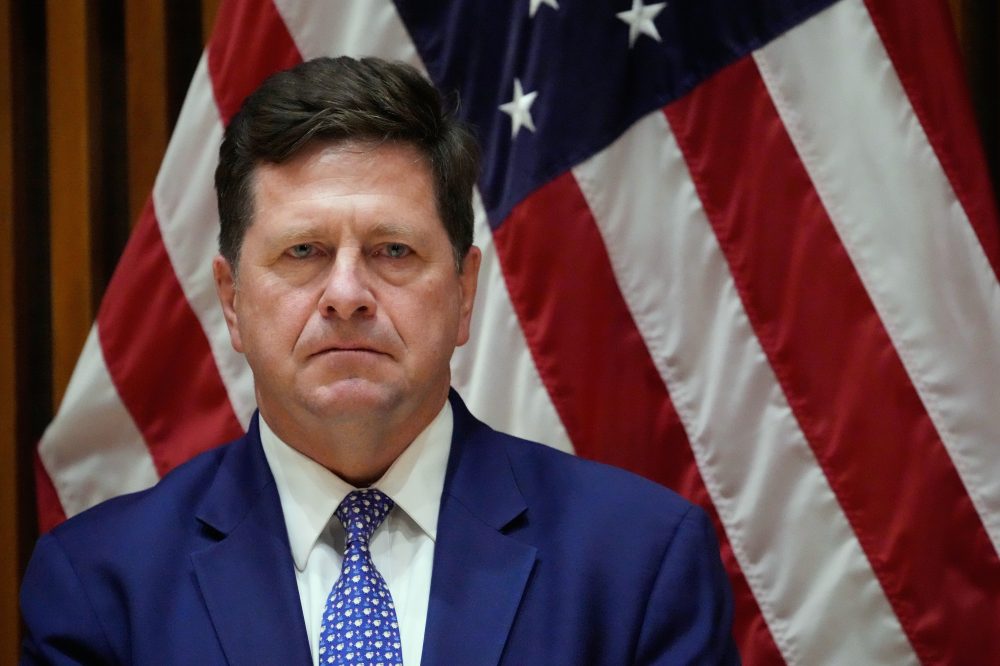
Trump delays Clayton’s nomination for intelligence director to try to push Congress on voter ID bill

EVIAN-LES-BAINS, France (AP) — President Donald Trump said Wednesday that he was delaying federal prosecutor Jay Clayton’s nomination to lead the U.S. intelligence community in a bid to force Congress to act on a voter ID bill that currently lacks enough support for passage.

The Republican president said in a social media post just hours before Clayton’s scheduled confirmation hearing that he will keep Bill Pulte, a top U.S. housing official, as acting director of national intelligence. Democratic and Republican lawmakers had opposed Trump’s selection of Pulte, citing his lack of known experience in intelligence and his use of his current administration perch to target perceived adversaries of the president — resistance that last week forced Trump to turn to Clayton.

The abrupt announcement creates instant uncertainty over the long-term leadership of the 18-agency intelligence community and dashes hopes for a swift renewal of a crucial surveillance program that expired in Congress last week due to bipartisan anger over Trump’s pick of Pulte.

That tool, Section 702 of the Foreign Intelligence Surveillance Act, permits spy agencies to collect without a warrant the communications of targeted foreigners located outside the United States. National security officials across both major political parties have for years described Section 702 as vital for gathering intelligence that can disrupt terror attacks and espionage operations, though some lawmakers and civil liberties advocates have raised concerns over the government’s use of information about Americans that is incidentally collected through the program.

Clayton had been set to appear on Wednesday for a Senate confirmation hearing that was fast-tracked because of the program’s lapse. Democrats had said they would not renew the expired surveillance programs until Trump withdrew the selection of Pulte.

Trump’s post suggests that debate to revive Section 702 could be indefinitely postponed. Lawmakers have sounded the alarm about the government operating without congressional authorization of the powerful spy tool.

A court order from last March certified that the program could continue for another 12 months, though it’s possible that communications companies could challenge the government’s authority to force them to cooperate and share data.

In his social media post, Trump accused Democrats of breaking a deal to renew the program after he nominated Clayton. Trump also said he does not want to remove Clayton from his current position as U.S. attorney for the Southern District of New York before his replacement, James McDonald, is approved. McDonald was named to the Justice Department post on Saturday.

And Trump added another condition: linking his approval of the surveillance program to the passage of a bill requiring people to show ID to vote.

“Therefore, to add a slight bit of intrigue but, for the Good of the Nation, and the People of our Country, I will not approve FISA without THE SAVE AMERICA ACT going along with it,” Trump said, using the acronym for the surveillance program and his name for the voter ID bill.

The Republican-controlled Congress has not acted on the voting bill because it does not have enough support in either chamber, particularly from Democrats.

Trump made the announcement in Evian-les-Bains, France, where he was participating in the final day of the Group of Seven summit of leading industrial economies.

The intelligence director position became available after Tulsi Gabbard, who had held the job, announced last month that she was resigning to spend time with her husband as he fights cancer.

Clayton, a chairman of the Securities and Exchange Commission during Trump’s first term, has spent the last 14 months as the top federal prosecutor in Manhattan, one of the Justice Department’s premier posts.

His office during that time facilitated the unsealing of thousands of pages of court records from the prosecutions of Jeffrey Epstein and Ghislaine Maxwell, documents that were made public as part of the Justice Department’s release of records related to the late sex offender and his longtime confidant.

Clayton has also overseen the prosecution of former Venezuelan President Nicolás Maduro and Maduro’s wife, Cilia Flores, on drug trafficking charges.

Epstein died by suicide in a New York jail cell in 2019 while awaiting trial on sex trafficking charges. Maxwell was convicted of luring teenage girls to be sexually abused by Epstein but insists she’s innocent. Maduro and his wife have protested their capture and said they’re not guilty.

___

Superville reported from Geneva. Tucker and Jalonick reported from Washington.


Brought to you by www.srnnews.com

Warsh-led Fed expected to hold interest rates steady

By Howard Schneider

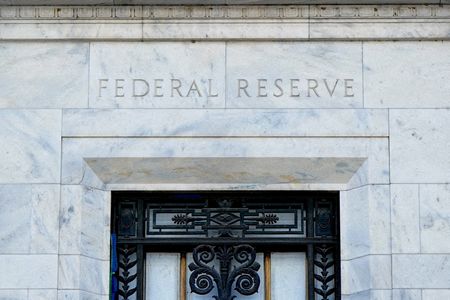
WASHINGTON, June 17 (Reuters) – The Federal Reserve is expected to hold interest rates steady on Wednesday at the end of the first meeting chaired by Kevin Warsh, with a new policy statement and economic projections likely to reflect growing concern about the inflation stoked by the Iran war even as oil prices slide on peace deal hopes.

With recent data showing strong U.S. hiring, a relatively low 4.3% unemployment rate, and inflation well above the U.S. central bank’s 2% target, many analysts anticipate the Fed will remove language from its policy statement about “additional adjustments” to its benchmark interest rate, a reference that had been used to indicate likely future decreases in borrowing costs.

Warsh has said he dislikes forward guidance about monetary policy in general, and recent data prompted many Fed officials to say it is time to remove the “easing bias” anyway in favor of more neutral language that allows for the possibility that rate hikes might be needed.

Investors currently anticipate the central bank’s policy-setting Federal Open Market Committee to deliver a quarter-percentage-point rate increase in December.

“We expect a more neutral bias,” Michael Feroli, chief U.S. economist at JP Morgan, wrote ahead of the Fed’s meeting. “It’s possible the committee, under Warsh, takes a cleaver” to the statement and wipes out rate guidance altogether, whether at this meeting or in the future.

In either case, Feroli said, changes to the statement may win over the three policymakers who dissented in favor of more hawkish language at the April 28-29 meeting, providing Warsh, who has regarded dissent as a sign of institutional health and wants Fed meetings to resemble a “family fight,” a unanimous vote in his first outing.

The Fed’s rate decision, policy statement and updated policymaker projections will be released at 2 p.m. EDT (1800 GMT). Warsh, who replaced former Fed chief Jerome Powell last month, will hold a press conference half an hour later, keeping to the schedule adopted by his predecessor for now.

Powell will continue to be a voting member of the policy committee in his ongoing role as a Fed governor.

In his U.S. Senate confirmation hearing, Warsh said he feels Fed officials talk too much and add too little to the policy discussion, a possible precursor to scaling back his own pace of public appearances and access.

Warsh, 56, who was confirmed last month to a four-year term as Fed chief and a 14-year term on the Board of Governors, took over the top job amid strained relations between Powell and the White House over the former Fed chief’s refusal to deliver the big rate cuts demanded by President Donald Trump.

The animosity was marked by Trump’s efforts to get more control over the central bank through an attempt to fire Fed Governor Lisa Cook, the first such move by a president, and the launching of a since-dropped criminal investigation of Powell.

The U.S. Supreme Court is due to decide this month on whether Cook can keep her job. While the ruling is expected to go in her favor, it could still have important implications for Fed governance in the future.

Powell, who attended Cook’s Supreme Court hearing, has been lauded broadly for resisting Trump’s pressure on the central bank. Warsh has not spoken directly on the Cook case or the pressure campaign against his predecessor.

ECONOMIC UNCERTAINTY CLOUDS FED OUTLOOK

Though Warsh starts on a new footing with Trump, the path to rate cuts may be narrowing.

The updated quarterly projections being released this week are expected to show Fed officials at the median no longer see the policy rate falling this year, but instead remaining steady in the current 3.50%-3.75% range amid higher anticipated inflation and possibly a lower year-end unemployment rate. Some officials are likely to pencil in a rate increase.

Warsh’s debut press conference may well be dominated by broad questions about his plans, which in the run-up to his nomination by Trump for the top Fed job included frequent criticism of the Powell-led central bank’s overall approach to policymaking and communications, calls to lower its holdings of financial assets, and promises of extensive reform.

But there are fast-moving short-term issues as well, notably the apparent end of the U.S.-backed war with Iran and the reopening of the Strait of Hormuz. While that development has sent world oil prices plunging towards levels seen prior to the start of the conflict in late February, Fed officials will now have to assess how much inflationary pressure may be left to come due to the recent jump in energy costs and what is anticipated to be a lengthy restart to global commodity shipments through the strategic waterway.

With the global oil price around $80 a barrel and some faith that a ceasefire in the Middle East might endure, “so far the impact on inflation looks more like the usual pass-through from large oil shocks,” and won’t require Warsh to raise rates, David Mericle, chief U.S. economist at Goldman Sachs, wrote in an analysis of this week’s meeting.

But rate cuts are likely to be on hold until at least the middle of next year, if they happen at all, given that headline inflation is expected to rise above 4% in the coming months and remain higher than 3% through 2026.

“A long pause would increase the probability that the FOMC could instead decide that the (federal) funds rate is already in an appropriate place if the economy continues to perform well,” Mericle said. “We see a flat path as a plausible alternative.”

(Reporting by Howard Schneider;Editing by Dan Burns and Paul Simao)


Brought to you by www.srnnews.com


US strike on an alleged drug boat kills 1, leaves 2 survivors in the eastern Pacific Ocean

The U.S. military attacked a boat accused of smuggling drugs in the eastern Pacific Ocean on Tuesday, killing one man and leaving two survivors, as the Trump administration continues its monthslong campaign against alleged traffickers in Latin America.

The latest attack brings the number of people who have been killed in boat strikes by the U.S. military to at least 208 since the Trump administration began targeting those it calls “narcoterrorists” in early September.

As with most of the military’s statements on strikes in the eastern Pacific Ocean and Caribbean Sea, U.S. Southern Command said it targeted the alleged drug traffickers along known smuggling routes. The military did not provide evidence that the vessel was ferrying drugs. A video posted on X showed a boat traveling in the water before being hit by the strike and bursting into flames.

Southern Command said it “immediately notified U.S. Coast Guard to activate the Search and Rescue system for the survivors.”

President Donald Trump has said the U.S. is in “armed conflict” with cartels in Latin America and has justified the attacks as a necessary escalation to stem the flow of drugs into the United States and fatal overdoses claiming American lives. But his administration has offered little evidence to support its claims of killing “narcoterrorists.”

Critics have questioned the overall legality of the boat strikes as well as their effectiveness, in part because the fentanyl behind many fatal overdoses is typically trafficked to the U.S. over land from Mexico, where it is produced with chemicals imported from China and India.

The strikes have drawn intense scrutiny from some Democratic lawmakers and military legal scholars. The U.S. military’s first strike in early September drew particular concern from some lawmakers and those who study military law.

Two men on the boat initially survived the attack that killed nine others, and they were clinging to the wreckage when the vessel was struck again, killing them. The White House confirmed the follow-up strike, insisting it was done “in self-defense” to ensure the boat was destroyed and in accordance with the laws of armed conflict.

But some legal scholars said a second strike killing survivors would have been illegal under any circumstance, armed conflict or not.

The Pentagon’s watchdog said in May that it plans to look into whether the U.S. military followed an established targeting framework when carrying out the strikes.

However, the evaluation is focused specifically on what’s known as the six-phase Joint Targeting Cycle and not on the legality of the strikes, the inspector general’s office said.


Brought to you by www.srnnews.com


In Georgia’s Capitol, Republicans’ redistricting session to begin without maps

ATLANTA (AP) — Georgia is the next Southern state where Republicans are convening to redraw voting districts in ways that could diminish the political power of Black and other nonwhite voters after the U.S. Supreme Court gutted Voting Rights Act provisions that helped shape existing boundaries in racially diverse states.

The General Assembly convenes Wednesday in a special session called by outgoing Gov. Brian Kemp in response to the court’s Louisiana v. Callais decision, which struck down Louisiana’s congressional map as an illegal racial gerrymander.

Kemp, who is in the final months of his second term, deviated from other governors who fast-tracked new congressional maps for the November midterms partly in response to President Donald Trump’s pleas to shore up the party’s chances at maintaining control of Congress. Kemp instead wants Georgia lawmakers to draw districts for the 2028 elections. Yet the governor moved ahead of his Southern counterparts by asking the Republican-controlled Assembly to redraw its own boundaries, as well.

That would make Georgia the first state to apply Callais to its legislature and demonstrate the cascading effect of the high court’s decision across Southern states that have the nation’s highest proportion of Black voters and Black lawmakers.

The issue is especially salient in Georgia, where the Capitol complex includes a statue of the Rev. Martin Luther King Jr. and sits blocks from where the slain civil rights icon lived, preached and led the movement that yielded the Voting Rights Act in 1965.

Still, neither Kemp nor Republican legislative leaders had unveiled proposed changes as of late Tuesday, frustrating Democrats and activists who plan daily demonstrations throughout the session.

“They have not been transparent,” said state Rep. Tanya Miller, a Black legislator from Atlanta who is the Democratic nominee for attorney general. “Something as fundamental as voters getting to choose their leaders ought not to be done in the dark, ought not happen in back rooms.”

The governor told The Associated Press he wasn’t ready to discuss details.

“I’ll talk about redistricting on Wednesday,” Kemp said as he campaigned for fellow Republicans ahead of Georgia’s primary runoffs that were held Tuesday.

House Speaker Pro Tem Jan Jones, a veteran of earlier redistricting efforts, said the outcome “will be a legislative prerogative” — a notion Kemp aides confirmed. But Jones said that even as a top-ranking Republican on the committee that would consider new maps, she hasn’t “been in any room creating maps.”

Asked directly who is drawing new districts, she replied: “I don’t know.”

Before Callais, Section 2 of the Voting Rights Act was understood to require maps — for Congress, state legislatures and local legislative bodies — that gave historically marginalized minorities a reasonable chance to select candidates of their choice. Nationally and in Georgia, those so-called “opportunity districts” have disproportionately elected Black and other nonwhite representatives.

For example, about a third of Georgia’s 180 state representatives are Black. Latino, Asian and other minorities bring the total nonwhite share to about 40% — roughly reflecting the state’s overall population. Georgia’s U.S. House delegation has five districts out of 14 total where the electorate is majority or plurality nonwhite. All elected Black Democrats in 2024.

With the Callais ruling, issued earlier this spring, a conservative majority of justices concluded that jurisdictions drawn with racial makeup in mind are discriminatory and violate the U.S. Constitution’s equal protection clause. The justices declared that apportionment should be “race neutral.”

Their stated reasoning did not hinge on party interests, and federal courts have said partisan gerrymandering is constitutionally permissible. But in Southern states, especially, party loyalty dovetails considerably with race and ethnicity. So the decision has allowed Republicans — a party dominated by white people — to redraw maps to goose likely GOP districts by redistributing nonwhite voters who tend to support Democrats.

That, many civil rights activists and experts argue, makes it impossible for Southern legislatures to be genuinely “race neutral” when drawing boundaries.

Emory University professor Carol Anderson compared Callais and the resulting redistricting push to poll taxes and literacy tests imposed by white Southern conservatives — and blessed by the Supreme Court — during the Jim Crow era.

“They used racially neutral language for policies that were clearly racially targeted,” said Anderson, who is also a board member of Fair Fight Action, a group organizing against the Georgia redistricting.

It’s not guaranteed that Georgia Republicans can get what they want from new maps.

Partisan gerrymandering involves redistributing voters — packing certain citizens into fewer districts or dividing them across more districts. Around metro Atlanta, spreading nonwhite, Democratic-leaning voters across more districts could make more seats seem to lean Republican. The risk, however, is that more battleground districts emerge because white metropolitan voters are trending less conservative, which could give Democratic candidates of any race or ethnicity more chances to win.

That’s perhaps not a major factor in the Georgia state Senate, which already is considered gerrymandered for Republicans. But it could be a consideration when drawing state House and U.S. House maps.

Kemp is effectively asking Republicans, especially in metro Atlanta, to redraw their own boundaries and take on new, unfamiliar territory.

Nationally, a partisan redistricting battle started last year when Trump urged Republican-controlled states to redraw congressional boundaries to shore up the GOP’s narrow House majority in Washington this November. Texas answered the call first.

California Gov. Gavin Newsom and Democrats in Sacramento answered with their own gerrymander that voters later approved. A succession of states followed. The outcome would have been close to even had the Virginia Supreme Court, controlled by conservatives, not struck down new Democratic-drawn maps approved by the state’s voters. All told, Republicans think they could gain as many as 16 seats from their redistricting efforts while Democrats think they could gain six seats from new districts in California and Utah.

That still may not be enough for the GOP to hold a congressional majority, given Trump’s lagging approval ratings. But it could mitigate Democratic gains and set Republicans up well for 2028 and beyond.


Brought to you by www.srnnews.com


Rex Heuermann to be sentenced in New York’s Gilgo Beach serial killings

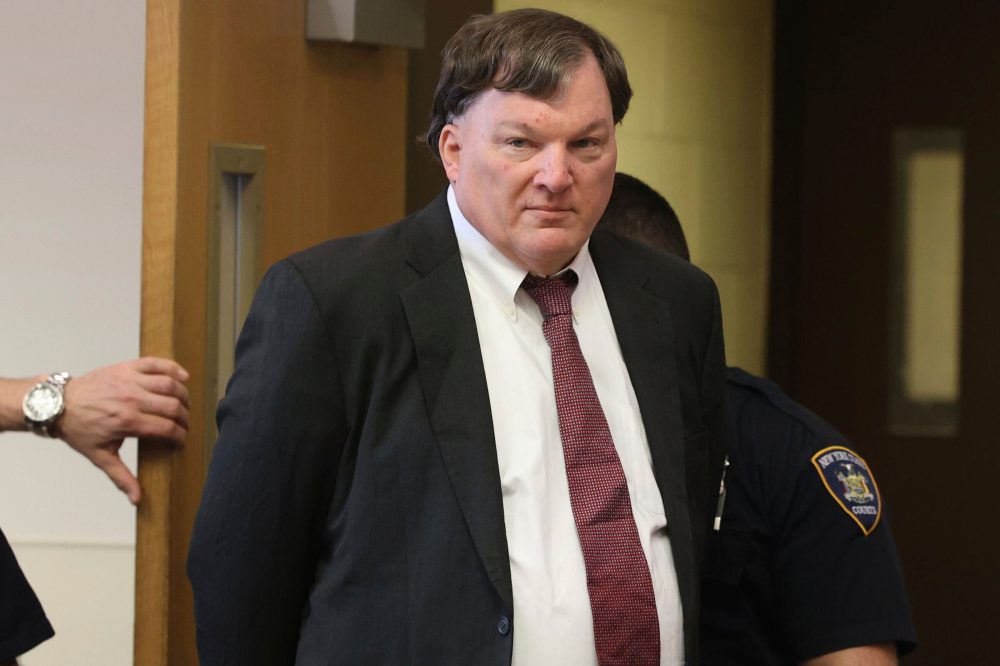
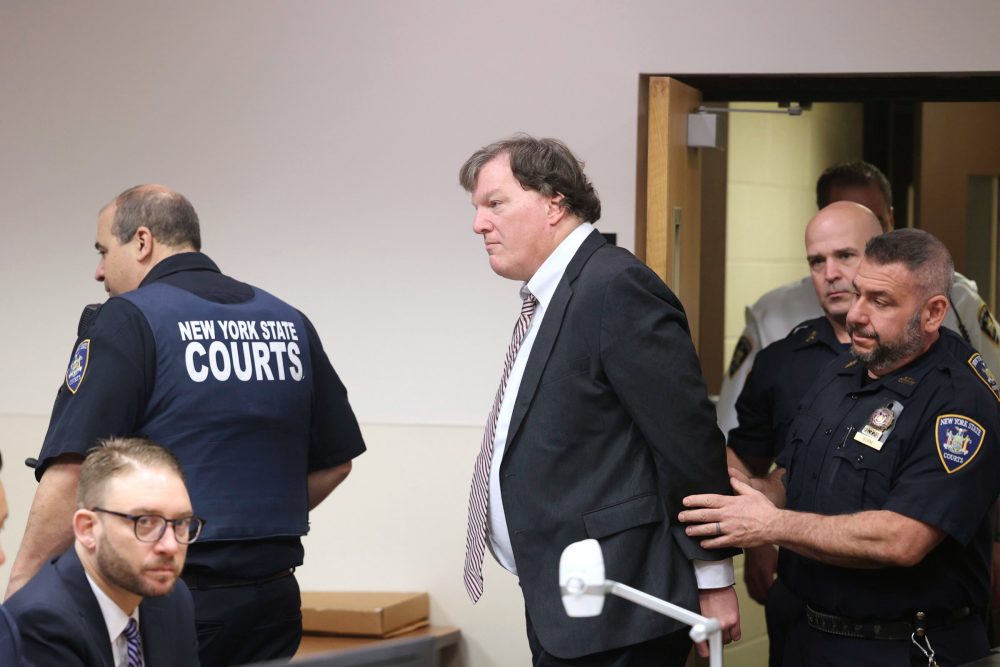
RIVERHEAD, N.Y. (AP) — A Long Island architect who lived a secret life as New York’s Gilgo Beach serial killer is being sentenced Wednesday after admitting in court that he murdered eight women.

Rex Heuermann faces the likelihood of a life prison sentence when he goes before a judge in Riverhead, New York. Family members of his victims are expected to address the court.

The sentencing caps an extraordinary investigation that solved one of New York’s most perplexing mysteries — one that began as a series of seemingly unconnected, and largely unmarked disappearances of young women, but became the focus of true-crime documentaries, books and podcasts after police began discovering the victims’ skeletal remains in the sandy scrub along a coastal parkway.

Heuermann, who has remained largely silent through multiple court appearances since his 2023 arrest, will also have a chance to speak Wednesday, but it’s not immediately clear if he will. His lawyers didn’t respond to messages seeking comment.

Asa Ellerup, his ex-wife, and their two grown children have said through their lawyers that they won’t be attending the sentencing out of respect for the victim’s families.

Heuermann, 62, of Massapequa Park, pleaded guilty in April to charges that he murdered seven women: Megan Waterman, Melissa Barthelemy, Amber Lynn Costello, Maureen Brainard-Barnes, Valerie Mack, Jessica Taylor and Sandra Costilla.

Though he was never charged in her death, he also admitted in court to killing an eighth victim, Karen Vergata. Heuermann said he strangled his victims, many of them sex workers, and dismembered some of their bodies.

Most of the women disappeared between 2000 and 2010, and most of their remains were found on a desolate parkway not far from Long Island’s Gilgo Beach, some 50 miles (80 kilometers) from Manhattan.

But two of the killings took place years earlier. Costilla’s remains were found in 1993, more than 60 miles (100 kilometers) away in the Hamptons, while Vergata’s remains were found in 1996 on Fire Island, more than 20 miles (32 kilometers) east of Gilgo Beach.

The case spilled into view in 2010, when investigators started to find remains along Ocean Parkway while looking into the disappearance of another sex worker, Shannan Gilbert, whose death was ultimately ruled an accidental drowning.

The search for the killer of the other women, though, went cold for years until a renewed investigation identified Heuermann as a potential suspect in 2022.

Detectives linked him to a pickup truck that a witness reported seeing when one of the victims disappeared in 2010.

Eventually, they matched DNA from a pizza crust Heuermann had discarded in a Manhattan trash can to genetic material extracted from highly degraded hair fragments found on the women’s remains.

Investigators amassed other evidence against Heuermann, including cellphone and tracking data showing Heuermann arranged meetings with some of the victims shortly before their disappearances.

Then in 2024, after Heuermann’s arrest, prosecutors recovered what they described as a “blueprint” for the killings from his computer files. Among the documents was a series of checklists with reminders to limit noise, clean the bodies and destroy evidence.

As part of his guilty plea, Heuermann has agreed to cooperate with the FBI’s behavioral analysis unit to help catch other serial killers.

He’s been housed in the county jail in Riverhead since his arrest in July 2023, but will serve out his term in a state prison to be determined later.

Heuermann has spent the past three years alone in a segregated cell, reading crime novels, occasionally being visited by his lawyers or family, and striking up a brief correspondence with the infamous “Happy Face Killer,” according to Suffolk County Sheriff Errol Toulon, who oversees the Riverhead jail.

___

Follow Philip Marcelo at https://x.com/philmarcelo


Brought to you by www.srnnews.com


A timeline of the investigation of the Gilgo Beach killings

In 2010, police searching for a missing woman began finding human remains in the scrub along a barrier island parkway near New York’s Gilgo Beach. Police almost immediately feared some were left by a serial killer.

Over the years, investigators used DNA analysis and other clues to identify the victims. In some cases, they were able to connect them to remains found elsewhere on Long Island years earlier.

Here is a timeline of the investigation that led to the arrest of Rex Heuermann, who pleaded guilty to murdering seven women and admitted in court that he killed an eighth.

Nov. 20, 1993: Two hunters discover the body of Sandra Costilla, 28, in a wooded area of North Sea, a hamlet in the Hamptons. Costilla had been living in New York City.

April 20, 1996: The partial remains of Karen Vergata are discovered on Fire Island, a barrier beach off the coast. Her name remains unknown to investigators until 2022, when new DNA analysis helps them make an identification. Vergata, 34, was involved in sex work when she vanished.

June 28, 1997: The partial remains of a woman are discovered inside a plastic tub in a state park in West Hempstead, New York. Investigators nickname her “Peaches” after a tattoo on her body. Her identity remains a mystery for many years, but in 2025 police identify her as Tanya Jackson, a U.S. Army veteran who was living in Brooklyn before she disappeared.

September 2000: The partial skeletal remains of Valerie Mack, who had been working as an escort in Philadelphia, are found in a wooded area in Manorville, New York. Mack, 24, was last seen by her family in the spring or summer of that year in Port Republic, New Jersey.

July 26, 2003: The partial skeletal remains of Jessica Taylor are discovered in a wooded area of Manorville. She was 20 when she vanished and had been working as an escort.

July 9, 2007: Maureen Brainard-Barnes, 25, who had traveled to New York from her home in Norwich, Connecticut, for sex work, is last heard from by a friend. She says she is leaving her hotel to meet a client. Investigators later say cellphone records showed her phone was last used on Long Island.

July 10, 2009: Melissa Barthelemy, a 24-year-old sex worker, is last seen at her Bronx apartment. She tells a friend she is going to see a man and will be back in the morning. Phone location data puts her last known location on Long Island. Days later, a man begins using Barthelemy’s mobile phone to make taunting phone calls to her relatives.

May 1, 2010: Shannan Gilbert, a sex worker, disappears in the barrier island community of Oak Beach, New York, after fleeing the house of a client and banging on a neighbor’s door. In a recorded 911 call, she tells a dispatcher people are after her, but she can also be heard refusing offers of help. Her pimp, the client and his neighbor all tell police she appeared disoriented and ran into the night on her own.

June 6, 2010: Megan Waterman, 22, who had traveled to Long Island from Maine for sex work, is last seen at a motel in Hauppauge, New York.

Sept. 2, 2010: Amber Lynn Costello, 27, is last seen leaving her home in West Babylon to meet with a sex work client. A male friend later tells investigators that person he presumed was the client drove a Chevrolet Avalanche.

Dec. 11, 2010: A police officer and his dog discover human remains while conducting a training exercise along Ocean Parkway. Authorities initially suspect they may have located Gilbert, but are later able to identify the victim as Barthelemy.

Dec. 13, 2010: Police find the bodies of Costello, Brainard-Barnes and Waterman on the same quarter-mile stretch of Ocean Parkway where Barthelemy’s remains were located.

Dec. 14, 2010: Suffolk County Police Commissioner Richard Dormer publicly announces the discovery of the bodies and says a serial killer might be to blame. Police expand the search, while still looking for any sign of Gilbert.

March 29, 2011: Some of Taylor’s remains are discovered along Ocean Parkway.

April 4, 2011: Additional remains of Valerie Mack are found along Ocean Parkway. Near those remains, investigators also find the remains of a 2-year-old girl, later identified through DNA as Jackson’s daughter, Tatiana Dykes. Elsewhere on the parkway, investigators discover the remains of an Asian male. Investigators estimate he died five to 10 years earlier and was in his late teens or early 20s. He still has not been identified.

April 11, 2011: Additional remains of Vergata are discovered along Ocean Parkway, several miles west of Gilgo Beach. Police also find additional remains of Jackson along the beach parkway.

Dec. 13, 2011: Gilbert’s skeletal remains are discovered in a tidal marsh near Oak Beach. After an autopsy, Suffolk Police say she accidentally drowned.

January 2022: The Suffolk County district attorney convenes a new task force to investigate the Gilgo Beach killings.

July 13, 2023: Investigators arrest Heuermann and charge him with murdering Costello, Waterman and Barthelemy. The key evidence is mobile phone location data suggesting Heuermann and the women were in the same places at some of the same times, and traces of DNA found on the remains.

Jan. 16, 2024: Heuermann is charged in the death of Brainard-Barnes. Prosecutors say a hair found with her corpse is genetically similar to a DNA sample from Heuermann’s wife.

May 20, 2024: Investigators launch a new search of Heuermann’s home. It lasts nearly a week.

June 6, 2024: Heuermann is charged with murdering Costilla and Taylor.

Dec. 17, 2024: An indictment is unsealed charging Heuermann in Mack’s death.

Dec. 18, 2025: A Florida man, Andrew Dykes, pleads not guilty to killing Tanya Jackson and Tatiana Dykes. Investigators say Andrew Dykes was Tatiana’s father and DNA evidence linked him to the crime. While in the end, the case was unconnected to the other Gilgo Beach deaths, the investigation benefited from the extra resources poured into the serial killer investigation, authorities say.

April 8, 2026: Heuermann pleads guilty to seven counts of murder, involving the killings of Barthelemy, Brainard-Barnes, Costello, Costilla, Mack, Taylor and Waterman. He also acknowledges in court that he killed Vergata.

June 17, 2026: A judge is scheduled to sentence Heuermann to prison for the killings.


Brought to you by www.srnnews.com


1 killed when small plane crashes on Texas highway. People leave vehicles to try to help

A business jet with six people on board crashed on a highway in Laredo, Texas, and caught fire Tuesday night, authorities said, killing one person and causing chaos as people left their vehicles to frantically try to smash the cockpit window and free those inside.

Drivers who came upon the burning plane, which was nearly sheared in half and tipped on its side, captured dramatic rescue scenes on video or rushed toward the aircraft on foot to help. Two people came running with a sledgehammer and shovel, which they used to strike the cockpit glass and try propping open the plane’s door.

The plane crashed on the Loop 20 highway near the Texas-Mexico border shortly after 10 p.m., said Jose Baeza, an investigator with the Laredo Police Department. It was unclear if the person who died was on the plane or the ground.

Dashcam footage posted on social media showed the aircraft careening down the highway, taking out a light post before coming to a stop. It came to a rest not far from the Laredo International Airport.

“It looked like part of a movie. I was in shock,” said Zayra Garza, an esthetician who was driving her co-workers home when she came upon the crash.

No injuries on the ground were immediately reported, though five officers were taken to the hospital for smoke inhalation.

The plane was a Cessna Citation Latitude twin jet, according to information from FlightAware, an aviation tracking and data company. It departed from Los Cabos International Airport in Mexico at 6:19 p.m.

It’s not clear what caused the crash as it reached Laredo, about 140 miles (225 kilometers) southwest of San Antonio. Laredo International Airport Director Gilberto Sanchez told KGNS TV in Laredo that the plane experienced a mechanical failure. He provided no details.

Video posted to social media showed the plane on its side, smashed into a highway barrier. The tail was ripped from the fuselage and laying mostly intact on a lower-level road beneath where the rescue was taking place.

Garza began shooting video as she approached the scene and then stopped her vehicle across from the crippled jet, which was on fire.

She saw someone inside the plane trying to break the cockpit window to escape. Soon, people got out of their vehicles to try to smash the window from the outside as the fire on the fuselage continues to burn.

Garza’s husband jumped out of their vehicle to help and Garza then saw the door of the plane open. She said three people who looked to be teenagers rushed out, followed by someone who appeared to be a pilot. Another member of the crew tried to pull out a person who seemed to be unconscious.

As smoke billowed from the plane, a firefighter used a small ladder to climb into the aircraft to rescue the remaining passenger, while others shot water out of a hose at the wreckage. Rescuers can be heard calling for a rope as others use rods to hold up the plane door.

Several times, officers helping prop open the door dart away from the plane and double over in coughing fits because of the intense smoke.

“What was worrying me was the fire,” she said. “I was concerned that it could have just exploded at any time.”

This was the third significant aviation accident in as many days. A B-52 crashed Monday during a test flight at Edwards Air Force Base in California and killed all eight people aboard, while on Sunday, 12 people were killed when a plane on a skydiving outing in Missouri crashed.

NetJets said in a statement that the crash involved one of its aircraft and it is working with authorities. NetJets is owned by Warren Buffett’s Berkshire Hathaway and allows people to buy part ownership in private jets.


Brought to you by www.srnnews.com


Townhall Top of the Hour News

Weather - Sponsored By:

TAYLORVILLE WEATHER

Local News

Facebook